
Solar Division · Multan Workshop

Solar Panel Installation, Maintenance & Automated Cleaning in Multan

PakMEC engineers install on-grid, hybrid and off-grid solar systems across Multan and nearby towns, keep them producing with measured maintenance visits, and build automatic solar panel cleaning systems — dry-brush robots and filtered sprinkler rigs — in our Multan workshop. One local team, never more than a short drive from your roof.

  • On-Grid & Hybrid
  • Solar Tubewells
  • O&M Plans
  • Inverter Diagnostics
  • Cleaning Robots
  • Sprinkler Systems
0.8%/dayDust loss rate
Lahore study
26.2%Lost in 100 days
uncleaned panel
IEC 62446-1Commissioning
test standard
Slots OpenMultan & nearby
town surveys
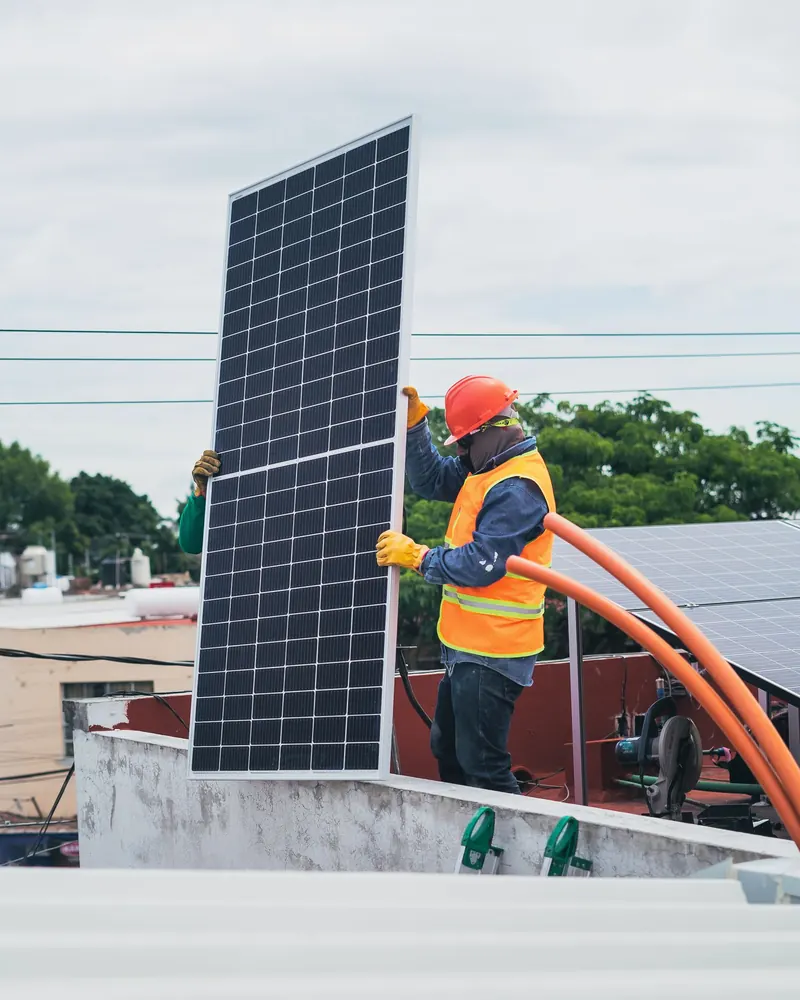
Technician carrying a solar panel across a flat concrete rooftop during a solar installation
Engineer-checked structures Roof-load & wind-uplift review by a PEC-registered civil engineer
Solar Desk Active Service area: Multan city & nearby towns Cleaning systems: built & installed in Multan MEPCO: net billing, 2026 rules Verified:

What We Do

Installation, Maintenance & Cleaning — One Engineering Team

Most solar owners in Multan juggle an installer, a cleaning crew and an inverter technician — and when output drops, each blames the other. PakMEC handles all three with one set of drawings, test records and responsibility.

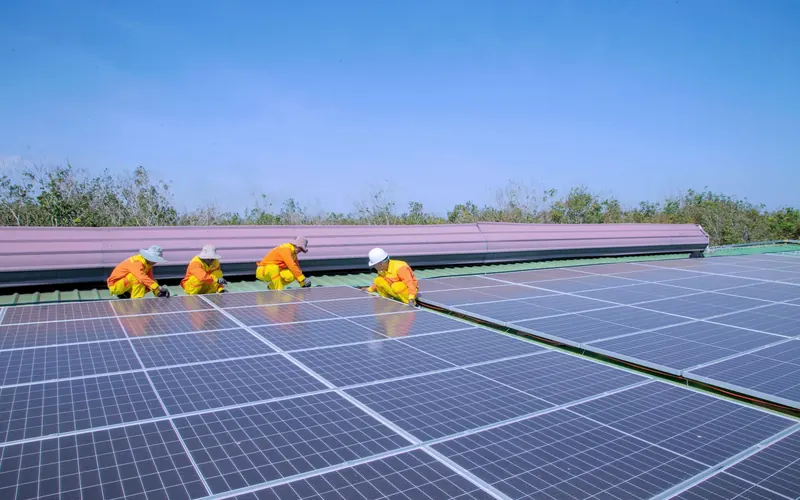
Electrician in a hard hat fixing a solar panel to its mounting rail with a drill Installation

Solar Panel Installation

Residential, commercial and agricultural systems designed around your bill, roof and DISCO — not a one-size package.

  • On-grid, hybrid (lithium) and off-grid systems, from 3 kW homes to industrial roofs
  • Solar tubewells with VFD pump drives for farms
  • Array layout and tilt set for your latitude and shading
  • Structure reviewed for roof load and wind uplift
System sizes & 2026 prices
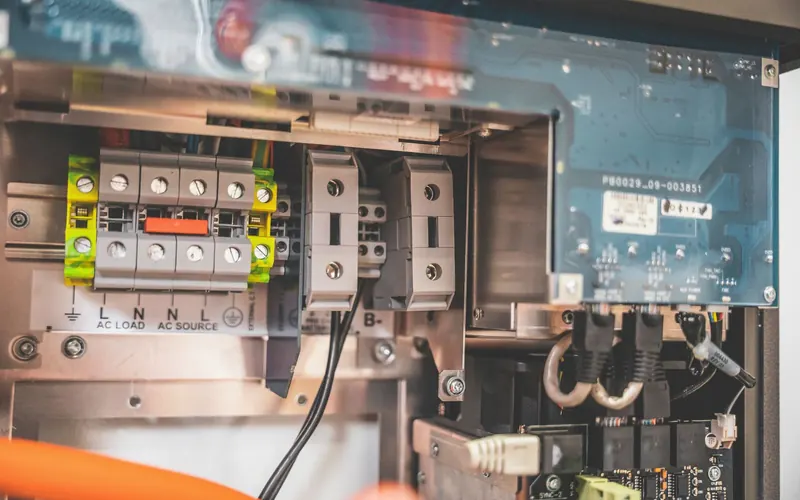
Open solar inverter showing AC terminals and control board during a maintenance inspection Maintenance

Solar Maintenance & Inverter Repair

Measured O&M visits that find the fault before your electricity bill does.

  • String voltage, current and insulation-resistance testing
  • Inverter error-code diagnosis and grid-fault tracing
  • Burnt MC4 connectors, loose DC terminals, SPD and earthing checks
  • Actual vs expected generation report after every visit
O&M plans & checklist
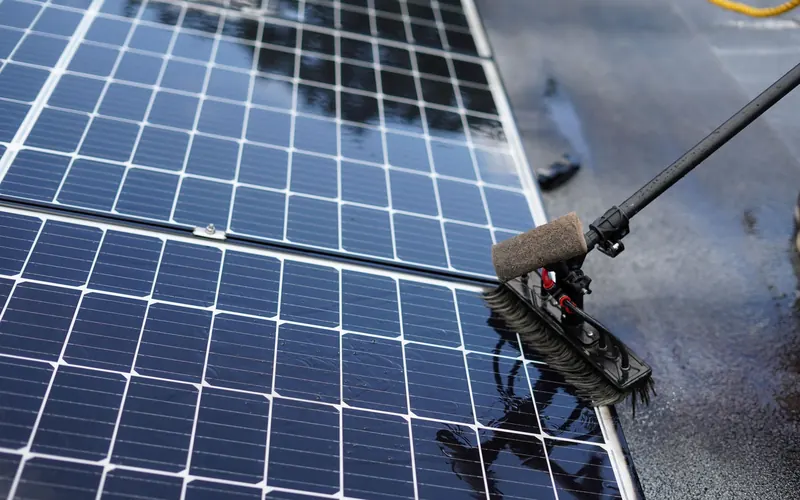
Soft-bristle brush washing dust off solar panels with water Cleaning

Solar Panel Cleaning Services

Soft-brush washing of your solar plates with tested water — or hand the job to an automated system.

  • Water checked for pH (6.5–8) and minerals before washing
  • Early-morning or late-afternoon cleaning — no cold water on hot glass
  • No detergents; hose pressure kept under 675 kPa
  • Dry-brush robots and sprinkler systems built in-house
Automated cleaning systems

Dust Loss Data

What Dust Costs Your Solar Plates — Measured, Not Guessed

Most cleaning companies quote a vague “up to 30%”. Here are measured Pakistani figures, and an estimator that turns them into rupees for your own system.

0.8%/day

Soiling rate measured on a 30°-tilted module over 120 days on a Lahore rooftop.

Ullah et al., Renewable Energy, 2020
26.2%

Energy lost by an uncleaned horizontal panel over 100 days in Lahore, compared with a clean panel.

Ullah et al., Renewable Energy, 2019
Weekly

Optimum manual cleaning interval for 30°-tilted panels in the Lahore study — every three weeks for vertical panels.

Ullah et al., Renewable Energy, 2020
pH 9.2

Highest groundwater pH across 68 samples in Khanewal, next to Multan — above the pH 6.5–8 JinkoSolar specifies for washing modules.

Iqbal et al., Water, 2021 · JinkoSolar manual

The Lahore dust was rich in carbon (soot from air pollution) and quartz (fine sand). That mix sticks to glass, which is why the same study modelled losses of up to 10% for lightly soiled panels and up to 40% for heavily soiled ones.

Dust-Loss Estimator

Built on the measured soiling rates above and Multan's sunshine. Adjust the inputs to match your system.

21 days
8.6%Output lost today
4.6%Average loss on this cycle
63 kWhUnits lost per month
Rs 3,797Cost per month

A weekly automated cycle cuts average loss to 1.7% and recovers about 40 kWh (Rs 2,414) every month.

How it works: loss(t) = 25% × (1 − e−r·t / 25%), a dust curve that starts at your daily soiling rate r and levels off below the 26.2% measured after 100 days in Lahore. The heavy rate (0.8%/day) is the Lahore study value. Monthly units = kW × yield × 30; the Multan yield is an approximate annual average. An estimate, not a guarantee — rain, tilt and nearby dust sources change real losses.

Automated Cleaning

Automatic Solar Panel Cleaning Systems, Built in Multan

Multan has plenty of cleaning crews but few engineered automation options. Our mechatronics workshop designs, fabricates and installs cleaning systems across Multan — matched to your array layout, water supply and budget.

Rail-Guided Dry-Brush Robot

A self-powered carriage rides the module frames and sweeps each row with a rotating soft brush — no water, no tanker, no crew on the roof. It runs before sunrise and parks off the array.

Water per cycle
0 litres
Best for
Continuous rows — ground-mounts, tubewell arrays, factory sheds
Drive
24 V geared motors on edge rollers
Power
Onboard PV panel + Li-ion pack
Control
Schedule, end-stop sensors, Wi-Fi/GSM status
Built with
CNC-cut aluminium and 3D-printed housings from our workshop
  • Cleans nightly if needed — more often than the study's weekly optimum, with no labour cost per cycle.
  • No water bills or hard-water film — ideal where groundwater is mineral-heavy.
  • Sized to your rows — rail length, brush width and battery matched per site.
  • Phone alerts for jams, low battery or missed cycles.
  • Local spares and service — parts are machined and printed in our Multan workshop, a short drive from your site.

How the dry-brush robot works

Schematic · one row of modules, viewed from the front

Dry-brush solar panel cleaning robot schematicA rail-guided robot with a rotating brush travels along a row of five solar modules, cleaning dust without water. Modules behind the robot are clean; modules ahead are dusty. The robot parks at a docking bay with end-stop sensors and is scheduled by a controller with Wi-Fi or GSM status reporting.123456CLEANED DUSTY
  1. 1Rotating soft brush lifts dust without water — 0 litres per cycle.
  2. 224 V geared drive on edge rollers — rides the frames, never the glass.
  3. 3Onboard PV panel + Li-ion pack — self-charging, no mains cable along the row.
  4. 4Docking bay with end-stop sensors — parks off the array so it never shades cells.
  5. 5Controller — pre-dawn schedule with Wi-Fi/GSM status alerts.
  6. 6Travel direction — one pass per scheduled cycle, then back to dock.

Automatic Sprinkler Wash System

A nozzle manifold along the top edge of each row rinses the glass on a timer. Ideal for flat residential roofs with an overhead water tank.

Water
Metered — each zone runs in short, timed bursts
Filtration
Sediment filter; softener or RO where water is hard
Timing
Dawn/dusk interlock — never on hot glass
Pressure
Held below 675 kPa (module-maker limit)
Control
Timer or ESP32 controller with rain-skip
Best for
Homes, schools and clinics with tank supply
  • Water tested first — we measure pH and dissolved solids before choosing filtration.
  • Anti-scaling design — prevents the white mineral film bore water leaves behind.
  • Works with your tank — pump, solenoid valves and piping sized to your roof.
  • Pair with quarterly visits for bird droppings and a full electrical check.

How the sprinkler wash system works

Schematic · one row of modules with its water supply, front view

Automatic sprinkler wash system schematicWater from an overhead tank passes through a sediment filter, a pump with a pressure gauge and a solenoid valve worked by a controller, then into a nozzle manifold along the top edge of the solar row. The nozzles spray the glass in short timed bursts and the water runs down the tilt and off the lower edge.123456
  1. 1Overhead tank — uses your existing roof water supply.
  2. 2Sediment filter; softener or RO added where the water is hard.
  3. 3Pump with pressure gauge — held below 675 kPa (module-maker limit).
  4. 4Controller + solenoid valve — dawn/dusk timer with rain-skip; never runs on hot glass.
  5. 5Nozzle manifold along the top edge — short, timed bursts per zone.
  6. 6Run-off — water flows down the tilt and off the lower edge, taking the dust with it.

Motorised Brush for Site Teams

A rotating soft brush on a telescopic pole, fed with filtered water. Your own staff can clean large arrays from the walkway without stepping on a single module.

Operator
One person, from the walkway
Water
Low-flow feed through an inline filter
Best for
Factories, schools and farms with on-site staff
Handover
Training session and cleaning log sheet
  • No standing on modules — JinkoSolar's manual prohibits it because it can crack cells.
  • Soft bristles only — no scouring pads, detergents or pressure washers.
  • Cleaning log so managers can confirm every row was done.

How the motorised brush works

Schematic · one row of modules, side view

Motorised brush cleaning schematic, side viewAn operator standing on the walkway holds a telescopic pole with a handle-mounted motor. A rotating soft brush at the far end cleans the tilted solar row, fed with water from a tap through an inline filter. Nobody stands on the modules.WALKWAY123456
  1. 1Rotating soft brush — no scouring pads, detergents or pressure washers.
  2. 2Telescopic pole reaches the far edge of the row from the walkway.
  3. 3Handle-mounted motor and switch — the operator controls the speed.
  4. 4Inline filter — a low-flow feed of filtered water to the brush head.
  5. 5Operator stays on the walkway for the whole clean.
  6. 6Nobody stands on the modules — JinkoSolar's manual prohibits it because it can crack cells.

Scheduled Crew Cleaning

Prefer people over machines? Our crews wash with soft brushes and tested water on a schedule set by your dust exposure, and check the electrical side on every visit.

Interval
Weekly to monthly, set by dust exposure
Method
Soft brush, tested water, no chemicals
Timing
Early morning or late afternoon
Area
Multan city and nearby towns
  • Before/after readings so you see the recovered output.
  • Photo report on WhatsApp after every visit.
  • Bird droppings and hard spots removed without scrapers or chemicals.
  • Add an O&M check — insulation, strings and inverter logs in the same visit.

How a crew cleaning visit works

Every visit, in the same order

Crew cleaning visit, step by stepEach crew visit runs in order: test the water, soft-brush wash in the early morning or late afternoon, inspect the glass, take before and after output readings, and send a photo report on WhatsApp. An electrical check can be added. The visit repeats every one to three weeks depending on dust exposure.Test water pH & minerals1Soft-brush wash early or late in the day2Inspect glass cracks, hot-spots3Before/after output readings4Photo report on WhatsApp5Electrical check optional add-on6Repeats every 1–3 weeks · interval set by your dust exposure
  1. 1Water tested first — pH (6.5–8) and minerals checked before any washing.
  2. 2Soft-brush wash with tested water, only in the early morning or late afternoon.
  3. 3Glass inspected for cracks, hot-spots, snail trails and burnt connectors.
  4. 4Before/after readings so you see exactly how much output was recovered.
  5. 5Photo report sent on WhatsApp after every visit.
  6. 6Optional electrical check — insulation, strings and inverter log in the same visit.

Who We Build For

Solar for Homes, Businesses & Farms

Different roofs, loads and dust problems need different system designs — and different cleaning strategies.

Installation crew fixing rows of solar panels on a flat rooftop Residential

Home Solar Systems

3–20 kW on-grid or hybrid systems for Multan's flat RCC roofs, sized so daytime AC and pump loads run on your own units first.

  • Elevated structures that keep roof access and water tanks usable
  • Hybrid lithium backup for load-shedding hours
  • Sprinkler cleaning fed from your overhead tank
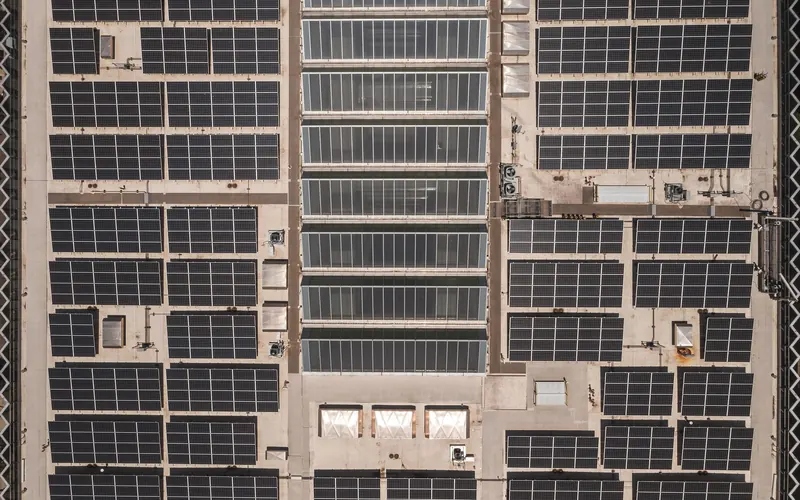
Aerial view of a large industrial rooftop covered with solar panel arrays Commercial & Industrial

Commercial & Industrial Solar

Factories, schools, hospitals and warehouses in and around Multan, where daytime demand matches solar output — the strongest case under net billing.

  • Load-profile analysis from your MDI and bill history
  • Shed-roof structures checked for purlin loads
  • Robot or crew cleaning contracts with reporting
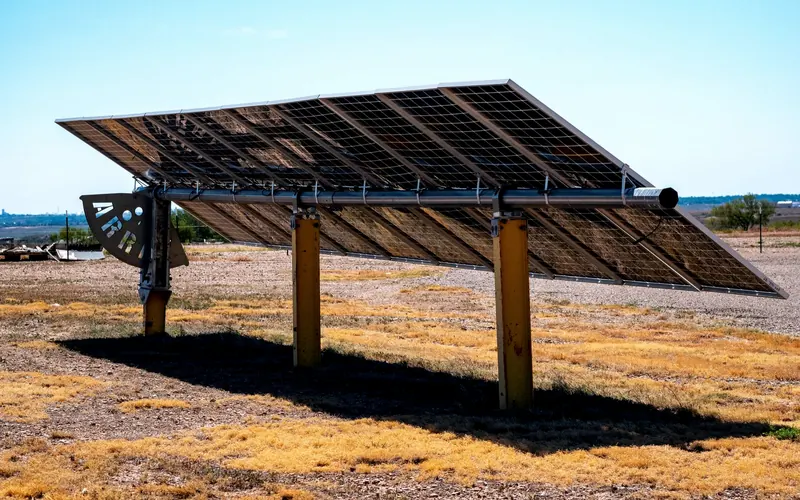
Ground-mounted solar array standing on dry, dusty farmland Agricultural

Solar Tubewells & Farms

Solar tubewells replace diesel for irrigation on farms and mango orchards around Multan, using a VFD to run the pump directly from the array.

  • PV array sized to pump kW and water-table depth
  • Ground-mount structures for open, dusty fields
  • Waterless dry-brush robots keep irrigation water for crops

Sizing & 2026 Prices

Solar System Price in Pakistan: 2026 Sizing Guide

Start with the monthly units on your MEPCO bill, then check your roof space. The price ranges are published installed prices for on-grid systems (September 2026), including Multan installers' price lists. PakMEC's quote for your roof is itemized and fixed after the site survey.

Monthly units assume 4.3–4.7 kWh per kW per day (annual average; summer is higher, winter lower). Panel counts use ≈585 W N-type modules. Price ranges are compiled from price lists published by Pakistani installers in September 2026. Hybrid systems with lithium storage typically add 30–40%.
System sizePanels (≈585 W)Roof spaceAvg. units / monthTypical loadInstalled price range (on-grid)
3 kW5–6≈300 sq ft≈390–420Lights, fans, fridge, water pumpPKR 3.4–5 lakh
5 kW9≈500 sq ft≈650–700Plus one 1.5-ton inverter AC in daytimePKR 5–8.5 lakh
10 kW17–18≈1,000 sq ft≈1,300–1,4002–3 inverter ACs, home officePKR 8.5–14 lakh
15 kW26≈1,500 sq ft≈1,950–2,100Large home, clinic, shopPKR 15–18 lakh
20 kW34≈2,000 sq ft≈2,600–2,800Villa, school block, small factoryPKR 19–24 lakh

On-Grid vs Hybrid vs Off-Grid vs Solar Tubewell

CompareOn-gridHybridOff-gridSolar tubewell
BatteryNoneLithium, typically 5–15 kWhLithium or tubular bankNone — a VFD runs the pump directly
During load-sheddingSwitches off (anti-islanding safety)Keeps chosen loads runningAlways on — no gridPumps whenever the sun is up
Net billingYesYesNoUsually no
Best forDaytime-heavy homes and businessesHomes and clinics with frequent outagesRemote homes, farms, telecom sitesIrrigation and livestock water
Relative costLowest per kW+30–40%Highest (battery autonomy)Set by pump kW and depth

Grid rules changed in February 2026. Under NEPRA's Prosumer Regulations, new grid-tied connections — including MEPCO connections in Multan — are net-billed: exported units are credited at roughly Rs 10–11 per unit while imported units are charged at your normal tariff (Express Tribune). So we size on-grid systems for daytime self-consumption first, not export.

Solar O&M

Solar Panel Maintenance & Cleaning Plans

Clean glass is only half the job. Every visit includes measured electrical checks, so you can see exactly what changed — and why. Plans are available across Multan city and nearby towns.

Single Visit

Clean & Health Check

One-off · any system size

  • Soft-brush wash with tested water
  • Visual check: cracks, hot-spots, snail trails, burnt connectors
  • Inverter error-log review
  • Before/after output readings
Every 3 Months

Quarterly Care

4 visits a year · optional monthly washes in dust season

  • Everything in Clean & Health Check
  • String Voc/Isc against temperature-corrected datasheet values
  • DC isolator, fuse, SPD and earthing checks
  • Structure bolt torque and corrosion check
  • WhatsApp report with photos
Annual Contract

Commercial & Agri O&M

Cleaning interval set from measured soiling

  • Insulation-resistance testing to IEC 62446-1
  • Infrared hot-spot scan of modules and DC boxes
  • Inverter fan and filter cleaning, firmware updates
  • Monthly performance-ratio report against expected yield
  • Priority fault response

Every-Visit Checklist

  • Insulation resistance — at least 1 MΩ, tested to IEC 62446-1
  • String Voc & Isc — flagged if more than 5% off expected
  • Polarity & earth continuity of every string and frame bond
  • MC4 connectors — heat marks, loose crimps, mixed brands
  • Isolators, fuses & SPDs — ratings and condition
  • Inverter — error log, fan and heat-sink cleaning, firmware
  • Structure — bolt torque, rust, clamp position, uplift ties
  • Cables — UV damage, rodent bites, conduit sealing
  • Glass & backsheet — cracks, delamination, burn marks
  • Yield check — actual units vs expected for your kW and season

Solar Inverter Repair & Fault Diagnosis

Inverter showing an error, tripping at midday or producing less than it should? We trace the cause on site — PV insulation faults, grid over-voltage, loose DC terminals, CT or meter wiring, failed fans — and fix installation-side faults directly. Board-level repairs go through the brand's authorized service centre, so your warranty stays valid.

  • Isolation / Riso fault
  • Grid over-voltage
  • PV over-voltage
  • Over-temperature
  • Leakage current
  • No grid / islanding
Book a Maintenance Visit

How It Works

From Electricity Bill to Commissioned System

Seven steps, each ending with a document you can check.

  1. 01

    Send your MEPCO bill & location

    WhatsApp your latest MEPCO bill (12-month history if possible), roof photos and a location pin in Multan or a nearby town. We reply with a first sizing.

    Same day
  2. 02

    Site survey & shading check

    Our crew visits your roof: measurements, shading between 9 am and 3 pm, structure and parapet condition, cable routes and meter details.

    1–2 days
  3. 03

    Engineering design

    Array layout, structure review for roof load and wind uplift, single-line diagram and a yield estimate under net-billing rules.

    2–3 days
  4. 04

    Itemized, fixed quote

    Brand, model and quantity for every item — panels, inverter, structure, cables and protection. No “extra material” added later.

    With the design
  5. 05

    Installation & commissioning

    Mounting, DC/AC wiring and earthing, then commissioning tests to IEC 62446-1: polarity, string Voc/Isc and insulation resistance.

    1–4 days (homes)
  6. 06

    MEPCO net-billing file & inspection

    Technical file prepared and processed with MEPCO through an AEDB-certified installer, as NEPRA rules require, followed by MEPCO's site inspection and meter change.

    MEPCO timeline
  7. 07

    Monitoring & cleaning schedule

    App monitoring set up, a cleaning interval chosen for your dust exposure, and an optional O&M plan.

    Ongoing

Service Area

Solar Services in Multan & Nearby Towns

Installation, maintenance and cleaning all need our own crew, tools and equipment on your roof. So for now we work on-site only in Multan city and towns within about 50 km — close enough to come back quickly whenever your system needs us.

PakMEC solar service area around MultanMultan at the centre with rings at 25 and 50 kilometres. Qadirpur Raan lies about 20 km east-north-east, Makhdoom Rasheed about 20 km east-south-east, Muzaffargarh about 30 km west-south-west, Shujabad about 40 km south-south-west and Khanewal about 45 km east-north-east.25 km 50 kmMultan Qadirpur Raan Makhdoom Rasheed Muzaffargarh Shujabad KhanewalN
Approximate positions · rings at 25 km and 50 km from Multan city centre

Multan city

  • Multan Cantt
  • DHA Multan
  • Bosan Road
  • Gulgasht
  • Wapda Town
  • Shah Rukn-e-Alam
  • New Multan
  • Mumtazabad
  • Northern Bypass
  • Multan Industrial Estate

Nearby towns (within about 50 km)

  • Qadirpur Raan
  • Makhdoom Rasheed
  • Muzaffargarh
  • Shujabad
  • Khanewal

Outside this area? We're not taking on-site jobs beyond Multan and nearby towns for now. Every installation, maintenance visit and cleaning job needs our own crew and equipment, and we'd rather do fewer jobs properly than stretch our crews across Punjab.

Multan Dust & Cleaning Calendar

Starting points based on Multan's seasons and the Lahore soiling studies; we tune them from before/after readings on your array. Always clean in the early morning or late afternoon, never on hot glass.
SeasonWhat builds up on your panelsSuggested cleaning interval
April–JuneFine desert dust, dust storms and wheat-harvest chaff; afternoons above 45 °CEvery 1–2 weeks, plus after every dust storm
July–SeptemberMonsoon showers rinse the glass, but light rain leaves mud spots; bird droppingsEvery 2–3 weeks; spot-clean after light rain
October–NovemberSmoke and soot from crop-residue burning; cotton lint during pickingEvery 2 weeks
December–MarchFog and smog film; the lower winter sun makes every lost percent countEvery 2–3 weeks

Why PakMEC

Typical Solar Installer vs PakMEC Engineering

The difference shows up in year three, not on installation day.

What gets checkedTypical installerPakMEC
StructureAngle-iron frame sized by eye; roof load and wind uplift uncheckedLayout reviewed by a PEC-registered civil engineer for roof load and wind uplift
System sizingOversized for export on old net-metering assumptionsSized for daytime self-consumption under 2026 net-billing rules
QuotationLump-sum price; “extra material” added on siteItemized brand, model and quantity — fixed after survey
Handover“System is on” — no test recordsIEC 62446-1 test sheet, as-built diagram and serial list
CleaningBore water, stiff brooms, midday washing on hot glassTested water (pH 6.5–8), soft brushes, early or late in the day
MaintenanceSeparate cleaner, separate inverter technicianOne team and one set of records for install, O&M and cleaning
AutomationNot offeredDry-brush robots and sprinkler systems built in Multan
After-sales visitsInstaller based in another city — revisits wait for their next tripMultan-based crew — your site is a short drive from our workshop

FAQs

Solar Installation & Cleaning Questions

Straight answers with numbers. Still unsure? Send your bill on WhatsApp and an engineer will size it with you.

Ask an Engineer

Published installed prices for on-grid systems in September 2026, including Multan installers' price lists, run from about PKR 3.4–5 lakh for 3 kW, PKR 5–8.5 lakh for 5 kW and PKR 8.5–14 lakh for 10 kW. Hybrid systems with lithium storage usually add 30–40%. Panel and inverter brand, structure height and cable runs move the price, so PakMEC gives an itemized, fixed quote after surveying your roof.

Divide the average monthly units on your MEPCO bill by about 135 (30 days × 4.5 kWh per kW per day) to get the kW you need. A home using 700 units a month typically needs a 5 kW system; 1,400 units needs about 10 kW. Under net billing it pays to cover daytime use first, because exported units earn far less than you pay for imported ones.

On-grid is the cheapest per kW but switches off during load-shedding for safety. Hybrid adds lithium storage so chosen loads keep running through MEPCO outages, at roughly 30–40% more cost. Off-grid suits sites with no grid connection. For farms and orchards, a solar tubewell with a VFD runs the pump directly without batteries.

A Lahore rooftop study found weekly cleaning optimal for 30°-tilted panels, which lost about 0.8% of their output per day to dust. In Multan that means every 1–2 weeks from April to June, when dust storms and harvest dust peak, and every 2–3 weeks for most of the year. Always clean after a dust storm — early in the morning, never on hot glass.

Rates published by Pakistani cleaning companies in 2026 range from roughly Rs 180 to Rs 600 per kW per visit, depending on system size, roof access and water supply; larger arrays cost less per kW. For frequent cleaning of large arrays, compare the one-time cost of an automated system against repeat crew visits — we quote both options side by side.

Yes. In Lahore, an uncleaned horizontal panel lost 26.2% of its energy over 100 days compared with a clean one, and researchers estimated losses of up to 10% for lightly soiled panels and up to 40% for heavily soiled panels. The dust was rich in carbon from air pollution and quartz from sand, so it sticks to the glass and needs proper washing.

It cleans panels on a schedule without a crew. PakMEC builds two main types: a rail-guided dry-brush robot that uses no water, best for long rows, ground-mounts and tubewell arrays, and a timed sprinkler wash with filtration for rooftop homes. It pays off where dust is heavy, arrays are large or roof access is difficult; small, easy-to-reach home systems are often fine with scheduled crew cleaning.

Only if the water is suitable. JinkoSolar's installation manual calls for neutral water (pH 6.5–8) and warns that mineral-rich water leaves deposits on the glass. Groundwater samples from Khanewal, next to Multan, measured up to pH 9.2, so we test water first and filter or soften it where needed. Never use detergents, abrasive pads or high-pressure jets (keep hose pressure below 675 kPa), and wash only in the early morning or late afternoon.

Yes. We prepare the technical file — single-line diagram, equipment datasheets and protection details — and process the application with MEPCO through an AEDB-certified installer, as NEPRA rules require. Since February 2026 new connections fall under NEPRA's Prosumer Regulations (net billing), so buy-back rates differ from the old net-metering scheme; we show you the numbers before you commit.

Yes, on site anywhere in Multan and nearby towns. We diagnose isolation (Riso) faults, grid over-voltage trips, PV over-voltage, over-temperature and communication errors — and fix installation-side causes such as damp DC junctions, loose terminals or undersized cables. Board-level repairs go through the brand's authorized service centre so your warranty stays valid.

Multan city and nearby towns within about 50 km — including Multan Cantt, DHA Multan, Bosan Road, Gulgasht, Qadirpur Raan, Makhdoom Rasheed, Muzaffargarh, Shujabad and Khanewal. Installation, maintenance, cleaning and automated-system installs all need our own crew and equipment on your roof, so for now we don't take on-site work outside this area.

Sources & standards

  1. Ullah A., Amin A., Haider T., Saleem M., Butt N.Z. (2020). Investigation of soiling effects, dust chemistry and optimum cleaning schedule for PV modules in Lahore, Pakistan. Renewable Energy 150, 456–468. doi:10.1016/j.renene.2019.12.090
  2. Ullah A., Imran H., Maqsood Z., Butt N.Z. (2019). Investigation of optimal tilt angles and effects of soiling on PV energy production in Pakistan. Renewable Energy 139, 830–843. doi:10.1016/j.renene.2019.02.114
  3. Iqbal J. et al. (2021). Hydrogeochemical assessment of groundwater and suitability analysis for domestic and agricultural utility in Southern Punjab, Pakistan. Water 13(24), 3589. doi:10.3390/w13243589
  4. JinkoSolar Global Installation Manual A1 (August 2024), section 6.2 “Cleaning”.
  5. IEC 62446-1: Photovoltaic (PV) systems — Requirements for testing, documentation and maintenance — Part 1: Grid connected systems.
  6. NEPRA (Prosumer) Regulations, notified 9 February 2026 — reported by The Express Tribune.

Reviewed by PakMEC's engineering team · Last updated

Survey slots open: Multan & nearby towns

Send Your MEPCO Bill. Get a Sized, Itemized Solar Plan.

Share your electricity bill and roof photos on WhatsApp. A PakMEC engineer replies with a first system size and the right cleaning approach for your roof, then books a site survey anywhere in Multan and nearby towns.

Quick WhatsApp Quote

Pick a service and add two details — we'll open WhatsApp with your message ready to send. On-site service covers Multan city and nearby towns.

Service

Nothing is stored on this page. Prefer email? info@pakmec.com · Contact page