
Electrical & Power Systems · Updated 2026-10-14
Final Year Project Ideas for Electrical Engineering: Power, Energy and IoT.
Discovering high-impact final year project ideas in Pakistan in electrical and power systems requires engineering a robust fyp prototype with demonstrable efficiency metrics, sensor logging, and industrial-grade PCB design.
Power electronics and IoT project ideas, with circuit architectures, PCB safety rules and component buying tips for Pakistan.
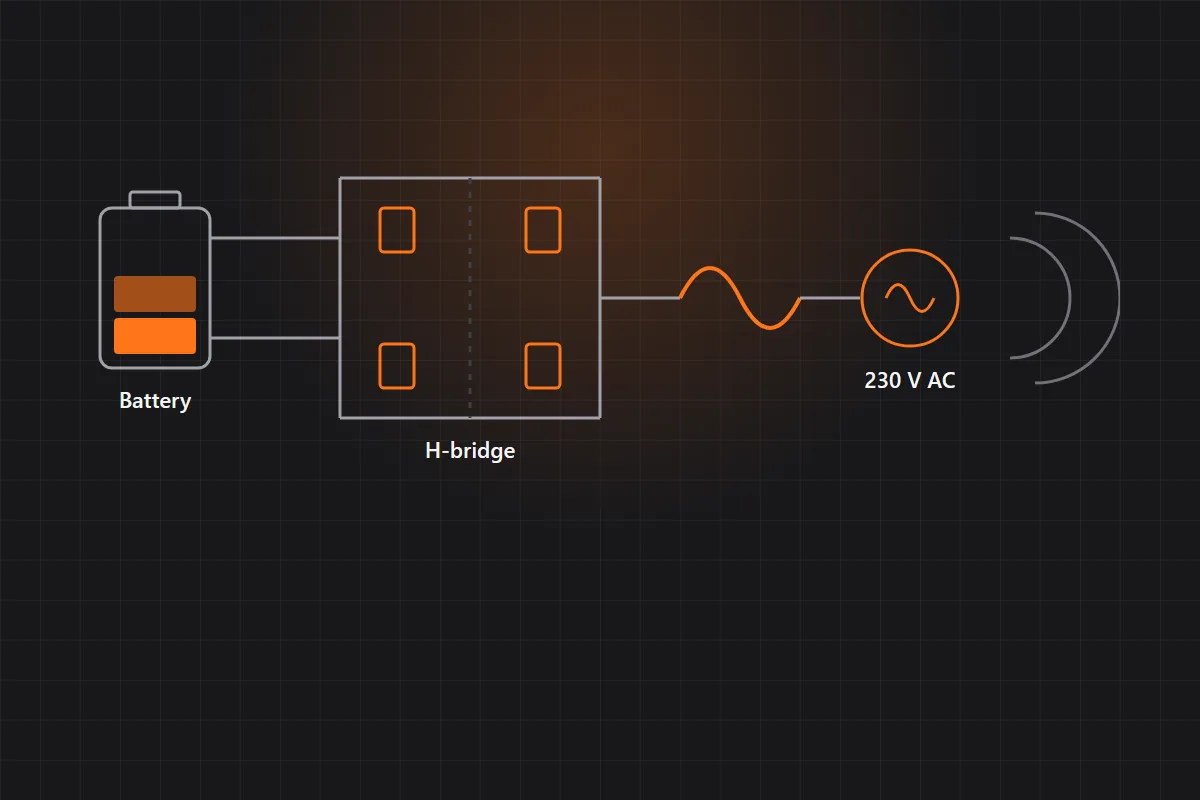
A strong electrical engineering final year project in Pakistan usually tackles an energy problem (power cuts, solar, batteries, metering or distribution) with working hardware and measured results. This guide gives power electronics and IoT project ideas, a comparison of four project architectures, PCB and safety rules for power circuits, and tips for buying components in Pakistan.
Electrical and power electronics FYP ideas
| Project | Power stage | Controller | What to measure |
|---|---|---|---|
| Pure sine wave inverter (500 VA to 1 kVA) | Full H-bridge with MOSFETs and IR2110 drivers | STM32 generating SPWM | Efficiency and THD under resistive and motor loads |
| Battery management system for a 48 V LiFePO4 pack | MOSFET disconnect, current shunt | ESP32 with a BMS front-end IC | Cell balance spread, protection trip times |
| MPPT solar charge controller | Synchronous buck converter | Arduino or STM32 running perturb-and-observe | Energy harvested vs a PWM controller on the same panel |
| Feeder protection and monitoring panel | Current transformers, contactor | ESP32 with GSM or 4G | Trip time on simulated faults, alert delay |
Pure sine wave inverter with SPWM
Convert a 24 V or 48 V battery bank into 230 V, 50 Hz AC with sinusoidal PWM, which runs fans and compressors more smoothly than a modified square-wave inverter. Build a full H-bridge with N-channel MOSFETs and half-bridge drivers, generate SPWM from a lookup table with dead time between switches, and filter the output with an LC filter. Show oscilloscope captures of voltage and current with resistive and motor loads, and report efficiency and THD.
Battery management system for light electric vehicles
Electric bikes and rickshaws are spreading in Pakistan, and their packs need protection. Monitor every cell voltage and pack temperature, balance the cells, and cut off the pack on over-voltage, under-voltage, over-current or over-temperature. Report state of charge on a display or over CAN bus, and show the protection working in a controlled test.
Dual-axis solar tracker with MPPT
Combine a two-axis tracking mount with an MPPT charge controller. Tracking gains vary with season and location, so measure your own: log the tracked panel against an identical fixed panel over several days and report the difference in energy.
Feeder protection and monitoring panel
Measure current, voltage and transformer temperature on a test feeder, trip a contactor on faults, and send alerts over GSM. Report trip times for each fault type and how quickly alerts arrive.
IoT project ideas for electrical students
- Smart energy meter with theft detection and remote disconnect: measure active and reactive power and power factor, and send readings over MQTT.
- Smart irrigation node: a solar-powered node that measures soil moisture and switches a valve, reporting over LoRa.
- Underground cable fault locator: estimate the distance to a fault on a test cable and compare with the real position.
- Transformer health monitor: log oil temperature and load and send alerts when limits are crossed.
- Patient vital-signs monitor (teaching demonstration): pulse, SpO2 and temperature with alerts, compared against a clinical device.
Choosing a wireless link
| Link | Typical range | Power use | Good for |
|---|---|---|---|
| Wi-Fi with MQTT (ESP32) | 30 to 50 m indoors | Moderate | Energy meters, home and lab automation |
| LoRa / LoRaWAN | 2 to 10 km in open areas | Very low | Farms, environmental sensors |
| GSM / 4G | Mobile network coverage | High in bursts | Remote monitoring, vehicle tracking |
| Bluetooth Low Energy | 10 to 20 m | Very low | Wearables, phone-connected devices |
PCB and safety rules for power circuits
- Trace width: size high-current traces with a trace-width calculator for your copper weight and allowed temperature rise. High currents on standard 1 oz copper need wide traces, so keep switching loops short.
- Isolation: keep microcontroller ground separate from the power stage, and use optocouplers or digital isolators for gate signals.
- Protection: fuse the battery input, add TVS diodes on exposed lines, and include a hardware emergency stop for anything that drives motors or mains voltage.
- Bench test early: simulations in MATLAB, Simulink or Proteus do not capture parasitic inductance or real component losses. Test the power stage at low voltage first, then step up.
The PCB design guide for FYPs covers the full board workflow.
Buying components in Pakistan
- Where to buy: Hall Road in Lahore, Saddar in Karachi and the electronics markets in Rawalpindi stock most modules and discrete parts. Online sellers deliver nationwide.
- Check for fakes: counterfeit MOSFETs and ICs are common. Compare markings with the datasheet and test a sample at its rated current before building the full circuit.
- Inductors and cores: measure inductance with an LCR meter before you fit a hand-wound inductor.
- Plan a second source: list an alternative for every critical part in your proposal.
For more project ideas across departments, see the list of 64 FYP ideas. PakMEC's FYP development support can design and fabricate PCBs, enclosures and mechanical parts for your project.
Frequently asked questions
Why do inverters fail during FYP demonstrations?
The most common cause is shoot-through: both MOSFETs on one leg of the bridge conduct together and short the supply. Add enough dead time, check gate signals on an oscilloscope, and test at low voltage before running at full power.
How is inverter efficiency measured?
Measure DC input power (input voltage times current) and real AC output power on a rated load with a true-RMS power meter, then divide output by input.
Is a simulation-only project acceptable for electrical engineering?
Some universities accept it, but a hardware prototype with measured results is usually easier to defend. Check your department's rules and your supervisor's expectations.
Which microcontroller should I use for a power electronics FYP?
STM32 boards suit fast PWM and control loops, and ESP32 boards suit projects that need Wi-Fi or Bluetooth. Analog controllers such as the SG3525 still work for simple converters but leave less room for monitoring and protection features.
Need help with the next step?
Need Custom PCB Design or Hardware for Your Electrical FYP?
PakMEC designs custom double-sided PCBs, power driver stages, high-current filtering, and microcontroller control loops for electrical students nationwide.